Curriculum
At Severnbanks, our curriculum is designed to prepare pupils to become Stars that SHINE.
We want out pupils to leave us as confident, curious, and resilient learners who are ready to succeed in education, the workplace, and wider society. We aim to equip every child with the knowledge, skills, and self-belief they need to be happy, ambitious, and well-prepared for the future.
Our Curiosity Curriculum 
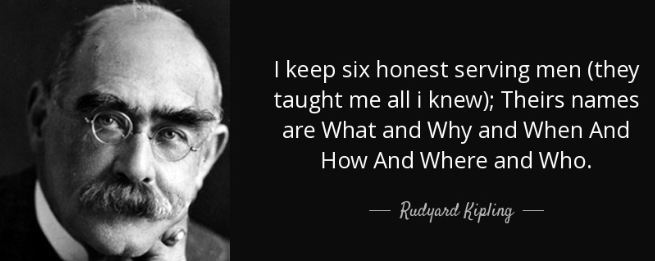
Our unique Curiosity Curriculum celebrates the individuality of each child and encourages them to explore the world through six key question words: What, Why, When, How, Where, and Who. These questions guide our approach to learning, helping pupils to think deeply, ask meaningful questions, and develop a lifelong love of discovery.
Through a broad and balanced curriculum, we nurture academic achievement alongside personal growth, creativity, and character development. Every subject is taught with purpose and passion, ensuring that children leave Severnbanks with strong foundations and the confidence to shine.
At its core are the National Curriculum, British Values and a number of carefully selected schemes, that are adapted by staff, in order to nurture every child in all dimensions of their life.
We use questions to encourage pupils to develop an enquiring mind and heighten their curiosity in order to promote a love of learning. Through our cross-curricular and text-enhanced approach, we seek to enable our pupils to move from the known to the unknown through connecting their learning experiences to previous knowledge and to the world around them.
In our rapidly changing society, we need to equip our pupils with the knowledge and skills that will serve them not only in their school lives but also into adulthood: subject knowledge, communication and listening skills, self-esteem and confidence, managing emotions and developing the ability to learn and to think critically.
Curriculum Enhancements
Our curriculum is enriched with a variety of first-hand experiences that actively engages our pupils both within the school environment and outside the classroom. These experiences add to the relevance and effectiveness of learning.
Curriculum enhancement map for 2026 coming soon
Language has a vital role to play in pupil development, helping them to add new vocabulary, acquire new knowledge and concepts as well as clarifying and interpreting experiences. The use of talk and discussion are central to our pupils learning in all subject areas. We use a variety to strategies to develop and enhance our pupils language including Primary Talk, Talk Boost and Philosophy for Children.
All children in the school follow the National Curriculum programs of study.
This includes:
Core subjects: Mathematics, English, Science.
Foundation subjects: RE, Computing, Technology, History, Geography, Music, PE, Art and Design, PSHE and SRE.
In Religious Education the school currently follows Discovery RE but is undertaking work to move towards the new Gloucestershire Agreed Syllabus from September 2026. We teach children about many faiths and encourage tolerance and understanding of others. Any parent has the right to withdraw their child from Religious Education by stating that they do not wish their child to receive Religious Education instruction from the school.
You can find out more information on individual subjects in the 'curriculum' menu on the right of the page.
British Values

Our aim is to ensure that pupils are prepared for, and have an appreciation of Life in Modern Britain through teaching and discussing British Values.
These Values are:
- Mutual Respect and the Tolerance of those with different faiths and Beliefs.
- Democracy
- Rule of Law.
- Individual Liberty.
We believe that children learn best when there is consistency and continuity in our approach to teaching and learning.
We teach for progress, which means that we work to ensure that all pupils are improving their skills, knowledge and understanding across all lessons and activities.
Teachers provide a broad and balanced curriculum, which develops the skills, concepts and knowledge necessary for future learning.
They contribute to the development of our school ethos by:
- Providing a calm, supportive and effective learning environment at all times, in which each child can achieve their maximum potential
- Providing meaningful, purposeful tasks, taken from the National Curriculum programmes of study and the Early Years Foundation Stage Curriculum.
- Providing a welcoming environment, in which good manners, kindness and mutual respect are fostered.
- Valuing and celebrating pupils’ success and achievements.
- Providing a safe environment where mistakes are valued are learnt from.
- Providing positive role models
- Providing a range of teaching styles that suit a range of learning preferences and linking learning to the bigger picture.
- Leading learning through a text led curriculum using cross curricular links wherever possible.
- Developing links with our local and wider community.
Equal Opportunities
In accordance with the school’s Equality, SEND and Inclusion Policies, all children at Severnbanks Primary School will be given full access to the Early Years Foundation Stage and National Curriculum.
Staff will endeavour to help all children to reach their full potential irrespective of race, physical ability, gender, age or learning ability.
Our Values and the curriculum
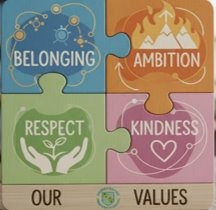
Our curriculum is shaped by our core values of belonging, ambition, respect, and kindness. While we teach all the requirements of the National Curriculum, we go further by focusing on the key skills and aspirations we want every child to develop during their time with us.
These values guide everything we do, making learning meaningful and enriching every experience. They have been created with input from our pupils, staff, and the wider school community, ensuring they truly reflect what matters most to us.
Alongside teaching the requirements of the national curriculum, key drivers have been identified. We have prioritised the key skills and aspirations we want our children to experience and develop during their time with us. We use these 'drivers' to underpin the learning and experiences we undertake in all areas of school life and to ensure our curriculum offer is enriched.
Belonging Ambition Respect Kindness
What will this look like?
1. Quality first teaching
- Highly focused lesson design with sharp objectives taken from the Subject Leaders’ Schemes of Work/Progression documents;
- High levels of engagement and interaction for all children within their learning;
- Excellent use of teacher explanations, questioning, modelling;
- Emphasis on learning through dialogue;
- An expectation that children will develop resilience and accept responsibility for their own learning and work independently;
- Regular use of encouragement and praise, using our school values, to motivate and enthuse children.
2. Focused assessment
- Rigorous assessment and tracking of children’s performance takes place to inform classroom practice allowing children to make good progress and close attainment gaps;
- Strengths and weaknesses identified to ensure timely interventions;
- Teaching and intervention programmes are adjusted in the light of the progress children make;
- Parents/carers are regularly informed on their child’s progress and any concerns shared;
3. Intervention
- Individuals and groups who are not making sufficient progress are identified;
- Provision for intervention is mapped according to need;
- Detailed plans are put into place;
- Interventions are evaluated and relevant adjustments are made;
- More able learners are enabled to perform at a greater depth for their year group where appropriate;
4. Learning environment
- Organisation of the classroom/learning environment adapted to the children’s learning needs;
- The use of learning resources and IT developed to allow children to work independently and successfully;
- Make effective use of other spaces – ‘quad’, library, IT suite, hall space;
- Displays to be a mixture of celebration of children’s work, supportive resources and information.
Impact
The impact of our bespoke curriculum will be measured in a variety of ways, both academically and in terms of a child’s personal development.
Personal development
1) How effectively it helps our pupils develop into well-rounded, caring individuals who embody the Severnbanks Values.
2) How effectively pupils develop knowledge, skills and attitudes to enable them to achieve a love of life and learning and play an active role in society?
Academic attainment and achievement
1) Assessment procedures will allow us to measure outcomes against all schools nationally. This includes:
- In Years 1 - 6 using NFER tests
- Continually using teacher assessment of Rocket Phonics' building towards the Phonics Screening Test in Year 1
- % of children in Years 3, 4 and 5 who are working towards, at the expected standards or greater depth against national
- End of Key Stage assessments, % of children working towards, at the expected standards or greater depth in reading, writing and maths
- Stringent teacher assessment of children unable to access the tests
2) Assessment procedures will allow us to measure the progress of all pupils from EYFS to Key Stage 1 and from Key Stage 1 to Key Stage 2.
For more information on what your child is learning please take a look at the individual
class pages.
If you require any further information regarding the curriculum for your child please speak to your child's class teacher; SENDCo Mrs S Hoolie or Headteacher Mrs N Bradley.